
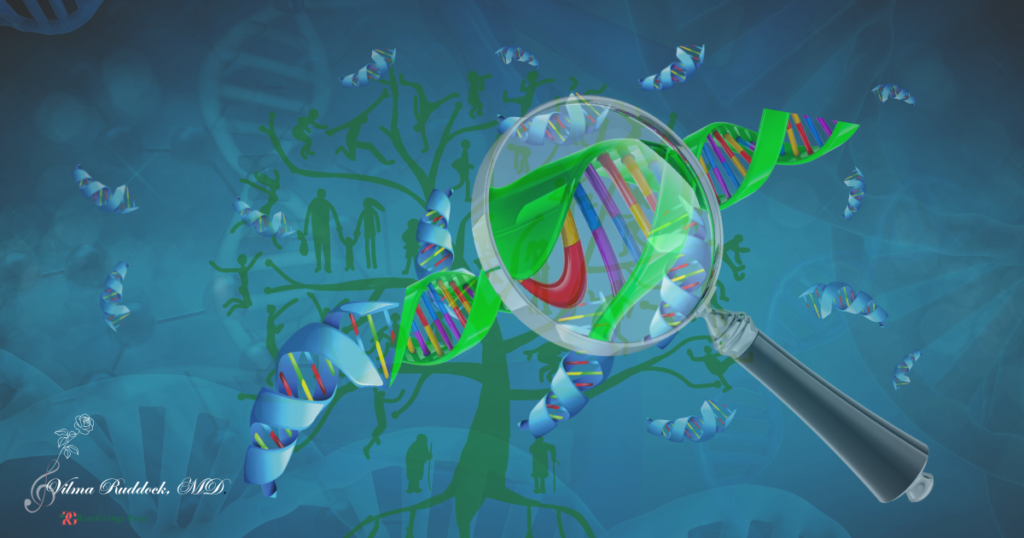
DNA, Epigenetics, and Ancestral Memory
By Vilma Ruddock, M.D.
Do our genes remember?
DNA carries the genes of generations of our ancestors. They encode our physical traits, such as eye color, hair texture, body structure, and even our risk for diseases. But does DNA also carry our forebears’ lived experiences—spiraling out of centuries of migrations, dislocations, separations, hardships, pain, triumph, and resilience?
As a physician and family historian, I see DNA not just as a genealogical tool for locating our origins and expanding our family tree, but as a living, biological archive of our ancestors’ lives.
“Epigenetic imprinting offers the possibility that we carry memories of our ancestors’ past in every cell.”
Epigenetics, Ancestral Memory, and Legacy
Some memories live in stories. Others may live in our cells.
One of the most fascinating frontiers is epigenetics—the study of how environmental experiences can modify gene expression across generations. In other words, our ancestors’ traumas and triumphs may leave biochemical markers or tags in our DNA. These switches, passed down through time, may influence our health, memory, and behavior.
Ancestral Memory
Are our ancestors’ experiences imprinted in our DNA like a biological memory? Can we inherit not only the genes for eye color and blood type, but also embedded fear, anxiety, joy, strength, endurance, or a drive to survive and heal?
Genetic memory.
Is that what intuition, dreams, and those déjà vu moments are made of? It’s a poetic and profound idea.

An Enduring Legacy
Epigenetics and Family History
Consider, as an example, the legacy of slavery in Jamaica through an epigenetic lens. What markers did the trauma, brutalities, fragmented identity, the resistance, and the fight for survival leave on the ancestors’ DNA? Yet the courageous spirit and resilience of generations of Jamaicans still endure.
And while the research is still evolving, epigenetics resonates deeply with many who are exploring DNA testing in genealogy and the work of ancestral memory and recovery.
“Sometimes our genes speak when the records fall silent.”
What Can DNA Testing Tell Us?
Our DNA can illuminate a family history and the paths our ancestors walked.
DNA testing promises answers to questions we ask: Where am I from? Who are my people?
Your match lists and ethnicity estimates (DNA Origins) may help you:
- confirm suspected relationships.
- identify unknown relatives.
- estimate regional ancestry, including West African, European, Iberian, South Asian, Chinese, and Middle Eastern heritage.
- trace biological lines when historical records are missing or incomplete.
For many family historians, the DNA helix is a bridge across gaps in the paper trail. What other answers might it hold in the silence?
“Remember that silence in the records does not mean silence in the lineage.“
What DNA Testing Can’t Tell Us
Some truths survive only in memory, silence, and the archives
DNA testing is a powerful tool, but it has its limits. For example, your results cannot:
- reveal the love, sorrow, hope, or resilience behind each generational legacy.
- name your great-great-grandmother, born enslaved on a Jamaican sugar estate.
- tell you what language she spoke before the Middle Passage.
- directly identify the undocumented ancestor who was a widow, orphan, indentured servant, convict, Cromwell’s prisoner of war, or “vagrant.”
For that, we turn with purpose to family stories and traditions, historical writings, and the persistent work of archival research.
Gynecology, Genes, and Genealogy
The Interconnections
Science helps us sharpen the questions that our imagination invites us to ask.
I have long been intrigued by the possibility of cellular memory and glimpses of our ancestors’ lives revealed in moments and dreams.
As a women’s health physician and fertility specialist, I am also captivated by the magic of reproduction, DNA science, and genetic inheritance.
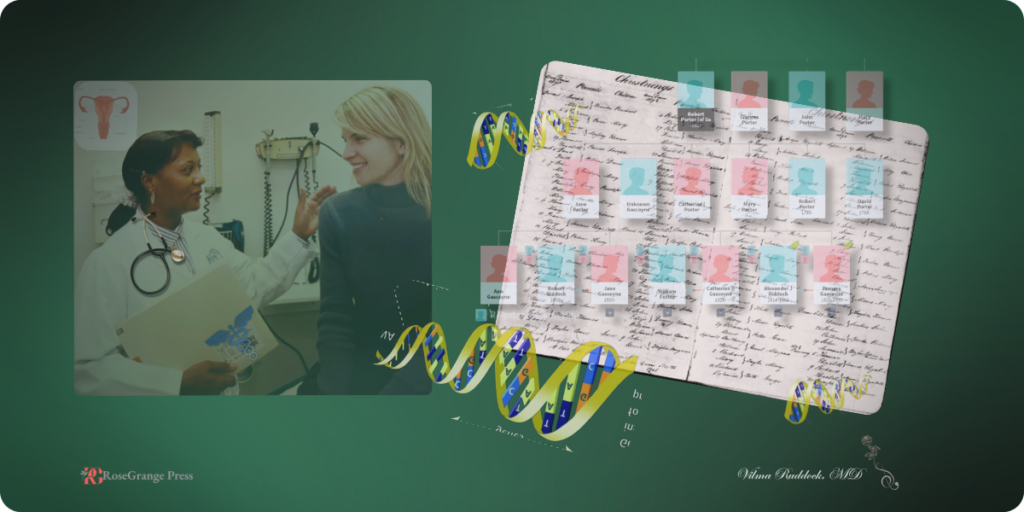
The intersection of my medical specialties, genes, and genealogy strengthens my Jamaican genealogy research and the guidance I offer other researchers. Understanding how genes are inherited can often help explain puzzling DNA results and highlight patterns you might otherwise overlook.
DNA testing is not a replacement for traditional paper genealogy research. However, it is an invaluable tool when you understand the underlying science and combine your results with your other discoveries.
Advice for Jamaican Family Historians
Every clue matters. Every silence has meaning.
For Jamaican genealogy researchers, DNA testing is especially valuable. In the absence of a reliable paper trail or oral history, the results can offer clues to ancestors’ regions, ethnic groups, and lineages—details often absent from written records.
Many Jamaicans descend from enslaved Africans and other groups who were poorly documented in the early colonial records because of the mindset of the era.
If you’re exploring your Jamaican family history, consider taking a DNA test and:
- use your “Match List” to expand your network of relatives.
- pay attention to patterns in surnames, clusters, and island regions.
- use your Ethnicity Estimates (DNA Origins) will point you to the origins of your ancestors.
- place your discoveries in historical context using estate archives, colonial records, maps, and family stories.
Remember that silence in the records does not mean silence in the lineage.
Sometimes our genes speak when the documents fall silent. Don’t let the gaps in your family tree discourage you from your search.
Personal Reflection
Every family tree begins with a single name.
DNA testing offers a glimpse into our ancestors’ origins.
Epigenetic imprinting suggests that we carry memories of their distant past in every cell. Let us hold that thought with reverence and curiosity.
My earliest memory is from age 2. A family “aunt” asked me what I wanted to be when I grew up. I replied, without hesitation, a doctor. I never let go of that goal. A memory from the ancestors? Surreal.
During my childhood, I only knew a handful of relatives. I often wondered about the origins of my ancestors. Later, I began my family history research with a list of names my midwife, healer, and storyteller grandmother gave me.
That list led me to the archives, online databases, DNA testing, my multiethnic Jamaican ancestry, and other doctors in the family history.
If this post resonates with you, feel free to share your experience with DNA testing, epigenetics, or forgotten family stories in the comments. I’d love to hear about your journey.
Stay Connected
I invite you to join my Email List to receive thoughtful updates, new research findings, and early access to upcoming posts and projects.