
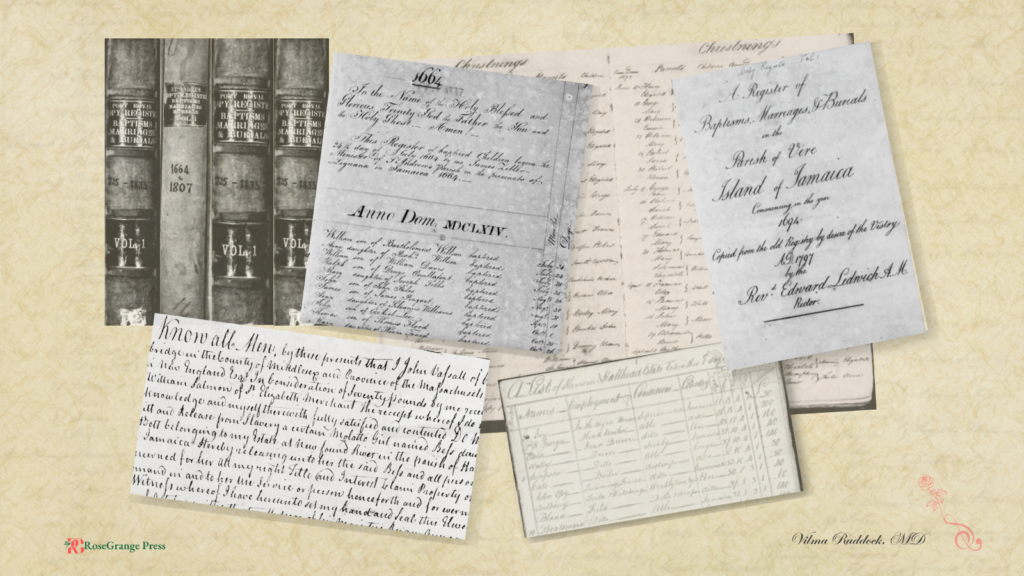
When I began tracing my Jamaican family ancestry more than 20 years ago, before records became available online, the journey was challenging. Living overseas, I had limited access to the island’s historical records. My progress was slow, but every breakthrough, no matter how small, made the effort worthwhile.
What began as curiosity — ignited by a handwritten list of ancestors from my grandmother — soon grew into a passion for Jamaican genealogy and history. Along the way, I encountered many obstacles, made surprising discoveries, and gained valuable insights into Jamaican family history research. I shared these lessons with others navigating similar challenges worldwide, which ultimately led me to publish a Jamaican genealogy research guide.
If you’re on a similar journey of discovery, here are some of the most important lessons I learned over the past two decades.
1. Start with What You Already Have
It’s tempting to dive straight into archives and online databases, but the best place to begin is always with your own family.
- Talk with older relatives and document their stories.
- Gather family records, letters, and photographs.
- Pay attention to names, dates, and locations. Even minute details can lead to major discoveries.
Once a generation is gone, their stories and knowledge are often lost forever. Start asking questions now, while you still can.
2. Not Everything Is Online
In the digital age, it’s easy to assume that all historical records are just a click away on the primary websites for Jamaican genealogy research. However, many Jamaican records are not yet online. They are available only in key historical registries, archives, and libraries in Jamaica or the UK.
It is also important to consider that:
- Parish registers, land records, estate documents, and family papers may require an in-person visit.
- Some documents are available only on microfilm or require staff-assisted searches of the paper records.
- Local oral histories and community knowledge can be just as valuable as written records.
If you hit a roadblock online, expanding your search to archival and community resources might reveal what you’re missing.
3. Names Are Tricky—Be Flexible
Jamaican genealogy presents a unique challenge: names are often inconsistent across records.
- Spelling variations are common, especially in older parish church registers.
- Some ancestors used nicknames, middle names as surnames, or even entirely different names in various records.
- Informant mistakes, clerical errors, or misread handwriting during indexing add even more complexity.
Always search for name variations, phonetic spellings, and alternative family names. This can increase the chances of finding your elusive ancestors.
“Placing your ancestors within the context of their time deepens your insight into their lives and the records they left behind.”
4. Understand the Historical Context
Your ancestors’ lives didn’t exist in a vacuum. Jamaica’s complex colonial history shaped your forebears’ migrations, occupations, social status, and opportunities, and the legacies they left behind. Ask yourself:
- Did they live during slavery or after emancipation?
- Were they European settlers, government officials, military men, indentured servants, prisoners of war, Maroons, or enslaved people transported from Africa?
- Were their names omitted from the records because they were not regarded as ‘worthy’ of being included?
- How did major historical events impact their lives?
- Did they perish in a rebellion, war, natural disaster, or epidemic that periodically ravaged the island?
- Were they buried in a mass grave, name not recorded?
Placing your ancestors in the context of their time will deepen your understanding of their experiences and help you interpret the records. It’s also essential to understand the history of Jamaica’s record-keeping itself.
5. Patience and Persistence Pay Off
Genealogy is rarely straightforward. You will encounter brick walls, frustrating gaps, detours, and records that seem impossible to find or interpret.
“Some of the biggest breakthroughs in family history research happen when you least expect them.”
The key is to remain persistent and patient. If a search yields no results for your target person, try a different approach:
- Look for siblings, cousins, or other relatives’ records.
- Search the records of neighboring parishes.
- Explore alternative resources such as family papers and Bibles, as well as newspaper archives.
- Take a break and return to the research later with fresh eyes.
Some of the biggest breakthroughs happen when you least expect them. The journey may be slow, but each discovery draws you closer to uncovering your family’s history.
6. Share and Preserve Your Findings
Genealogy isn’t just about uncovering the past—it’s also about preserving it for the future.
- Keep organized records and cite your sources.
- Share your discoveries with family members to keep the knowledge alive.
- Consider preserving your research, whether in a family tree, a blog, or even a book.
Your work may become a priceless gift to future generations searching for their roots.
Final Reflections
Reflecting on my 20-year journey, I’ve learned that genealogy is more than just names and dates. It’s also about connecting with the past, understanding our heritage, and preserving the stories of those who came before us.
Each challenge, each breakthrough, and each lesson learned deepened my appreciation for the rich tapestry of Jamaican history and our ancestral origins. If you’re on your own genealogy journey, keep going. The discoveries waiting for you are worth every effort.
Want to Delve Deeper?
My book, Jamaican Genealogy Research: A Practical Guide to the Best Resources for Tracing Your Ancestry, offers a comprehensive path to the resources, methods, and insights essential for Jamaican ancestry research.
Join the Journey
If this exploration resonated with you, I invite you to join my email list. I send thoughtful updates, new research findings, and early access to upcoming posts and projects.
What lessons have you learned during your research? I would love to hear about your experiences in the comments.